


15 Best Movies of 2025
This past December marked the end of one of the more tumultuous years in recent times. If 2024 promised a year full of horrifying prospects, 2025 delivered. Perhaps that is why our top 15 best movies list this year reflects a reckoning with the difficult present. But this reckoning isn’t hopeless. Rather, it betrays a hidden strength. The best films of 2025 demand us to look directly at the terrors of our time. They challenge our tendency to cling to simplified narratives that are rooted in historical inequality or the inertia of traditions. They offer glimmers of faith in the present, in lieu of empty promises for the future.
More than a couple films this year try to resurrect the past, the most literal of which is Guillermo del Toro’s pitch perfect adaptation of Mary Shelly’s Frankenstein. Had I been able to experience this glorious reimagining on the big screen rather than through a Netflix screen, it may have grabbed a spot on the list. Spike Lee adapted Akira Kurosawa’s 1963 classic into Highest 2 Lowest, playing to the strength of the classic while infusing his own unmistakable flavor. I am already mad at myself for not putting Robert Egger’s adaptation of Nosferatu on the list; nothing but praises for this spellbinding gothic creature feature. Finally, I would be remiss not to mention the re-release of Princess Mononoke, which would’ve topped the list if it actually premiered this year.
Mortality was a common theme in 2025, as you’ll see throughout the list. I was not a fan of Osgood Perkins’ The Monkey when I first saw it, but grew to appreciate its core message about dealing with death. Zach Cregger’s much-anticipated and much-acclaimed Weapons is another excellent film about grief and loss that falls slightly short of penetrating my soul (where the film on the ninth spot succeeded). The Room Next Door is practically a feature length dialectic on mortality, driven by Tilda Swinton and Julianne Moore’s natural chemistry. Finally, A Useful Ghost has been the most critically successful among the recent tradition of Thai independent films dealing with traumatic memories. While director Ratchapoom Boonbunchachoke handles the deadpan tone and hidden subtexts extremely well in the first half, the second half of the film was a bit too direct in its historical references, falling short of the nuances of its thematic peers.
Needless to say, these are all excellent films, but there are 15 more that really resonated with me in this year of reckoning.

(Credit: Vulture)
15. Companion
When it comes to a movie like Companion, the cinematic experience is paramount to its overall impact on the viewers. This is a movie that is best watched old-fashioned, meaning you avoid the trailers, perhaps you only see a glimpse of the poster, and then you walk in completely blind, letting the story and characters surprise you. As someone who followed this protocol rather strictly with any movies, I had one of the most entertaining days at the cinema early on in the year. A well-selected ensemble, intriguing story, and sharp writing elevate a story that may feel familiar on paper into a rocky romp of a ride.

(Credit: TV Guide)
14. Wake Up Dead Man: A Knives Out Mystery
Now that we are at the third installment of Rian Johnson’s Benoit Blanc series, I can confidently say the Knives Out brand has resuscitated the genre of detective fiction. What sets these films apart is not only the originality and modern sensibility of the story, but Johnson’s decision to center each of the mystery on a single non-detective character that acts as the film's emotional core. In Knives Out (2019) and Glass Onion (2022), we had Ana de Armas and Janelle Monet. In Wake Up Dead Man, Josh O’Connor took up the mantle as the one good person in the entire story. And here lies the secret ingredient: Benoit Blanc is not just solving any old murder mystery; he is discovering why in these days and age, it is so difficult for a good person to do the right thing. If Agatha Christie and Sir Arthur Conan Doyle write stories to question the morality of their time, Johnson and Craig are attempting the same feat in a much more complicated century.

(Credit: Los Angeles Times)
13. Cuckoo
I have always had a soft spot for ‘a-tier b-movies’, especially as a subgenre of horror. The European madness at the center of Cuckoo’s premise does not set it apart from its American peers (think 2021’s Malignant). Rather, it is the deep ‘indie’ sensibility - a symptom of an allergy towards Hollywood-esque story-telling and tone - that makes Cuckoo a one-of-a-kind experience. You feel like you’re watching a movie from the 1970s, especially when you have Dan Stevens hamming it up as a suspicious German resort owner literally named Herr Konig. It is genuinely funny that Dan Stevens has the look to play James Bond, and has indeed been cited as a potential Craig replacement, only for him to play one of the best iteration of Blofeld I have ever seen. Against Stevens’ eccentric stage presence, Hunter Schafer’s strongly grounded acting balances the flavor in this cuckoo pot of craziness.

(Credit: Bam Smack Pow)
12. The Fantastic Four: First Steps
Finally, we have a good Fantastic Four movie. I think for fans of the comics, a passable film would’ve felt like a blessing after literal decades of Hollywood missing the mark on this high potential IP. But here we have a movie that perfectly captures the sincere spirit of Marvel’s most famous family. And that’s the key word: sincerity. For far too long, the MCU has relied heavily on the kind of humour that distances the audience from the character and the underlying emotions of the story. They were more focused on making characters cool and meme-able, than making them human and relatable. Here, the core cast - Pedro Pascal, Venessa Kirby, Ebon Moss-bachrach, and Joseph Quinn - was excellent because they let the characters shine brighter than their star powers. Ironically, Fantastic Four: First Steps succeeded because it felt so different from what a Marvel movie has been in these past couple of years.

(Credit: The New Yorker)
11. 28 Years Later
Alex Garland is one of the most well-respected names in the shrinking space of science fiction filmmaking. While 28 Years Later is better known as a sequel in an iconic horror zombie franchise, its sci-fi sensibility shines through. A dystopian future that acts as a mirror to humanity’s present is nothing new, but Garland leveraged the thematic relevance of isolationism, nationalism, and militarism, making this film extremely timely in the wake of Brexit, the second Trump presidency, and the rising tide of the right. 28 Years Later is the most moving film of the trilogy, dealing not only with the dread of a civilisation reduced to survival, but the beautiful shreds of humanity that can be salvaged with touches of empathy. As the trajectory of western civilization bends towards rabid self-preservation, Garland is essentially launching a treatise that defends its tradition of humanism.
(Credit: The Guardian)
10. Black Bag
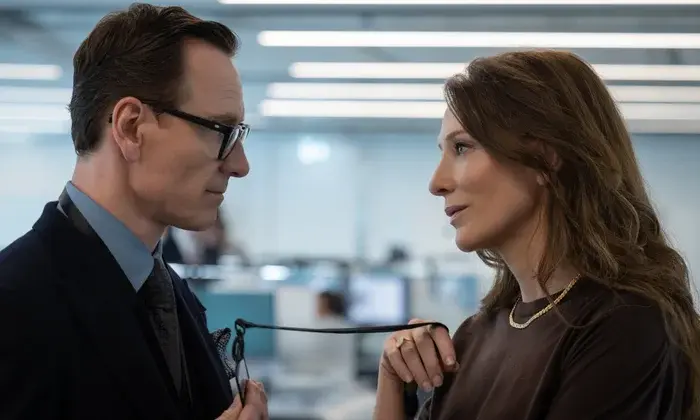
It is simultaneously baffling and painfully obvious why Steven Soderbergh has not been offered a gig to write a James Bond movie. Baffling - because Black Bag is the tightest and best directed spy thriller I’ve seen in a while. And, it is very British. Painfully obvious - because Soderbergh is a poster child of independent filmmaking. Reflecting this, Black Bag is so averse to the excess of Hollywood that it allocates the majority of its runtime to conversations. Although, these conversations feel a million times tenser than any shootouts in a typical American blockbuster. Understanding the assignment, Black Bag’s competent cast led by Michael Fassbender and Cate Blanchett offer performances that come together like an intricate painting. Such a passion for detailed direction and layered filmmaking is what makes me pray that Soderbergh never makes good on his plan to retire early.

(Credit: KB101 FM)
9. Bring Her Back
It’s not a mystery to me why the Philippou brothers’ second feature didn’t make as big of a splash as their hit debut, in spite of being - in my opinion - a superior film. My theory is that while 2023’s Talk to Me dealt with an extremely dark subject matter, it has a distinctly fun ‘viral’ energy which is derived from the brothers’ background in YouTube skits. In contrast, Bring Her Back is the embodiment of a downer film, one that drills into the depth of your soul and refuses to be dug out. This is the kind of horror that really freaks me out; the kind that I wanted to stop watching, but simply couldn’t; the kind that I want to forget but can’t help remembering.

(Credit: Picturehouse)
8. Final Destination Bloodlines
In the horror spectrum, the sixth instalment of the iconic Final Destination series is about as far away as one can get from Bring Her Back. Bloodlines is the prime example of a fun, crowd-pleasing horror blockbuster. Movies like this are why rowdy teenagers make up the majority of the genre’s demographics. And it’s why years from now, those teenagers will look to these movies with unbreakable nostalgia. By granting us the ability to laugh and cheer not only at death, but its inevitability, the Final Destination series epitomizes the satirical power of horror. Bloodlines enhance that by giving us likeable characters, all-time kills, and a heartfelt goodbye to the late great Tony Todd.

(Credit: Vulture)
7. Grand Tour
From the blockbusting fun of the previous entry, we embark on an artsy journey across Asia. Upon this Grand Tour, director Miguel Gomes paints a philosophical inquiry into the meaning of life and love. There are resonances of 1982’s Fitzcarraldo, only where Herzog’s film focuses on the critique of male colonial ambitions, Grand Tour is most fascinating when it flips to the story of Molly, who is played with magnetic star power by Crista Alfaiate. As Molly chases her feeble fiance, we find the landscape of Asia unchanged by and indifferent towards the meaningless pursuit of these two foreigners. In refusing to speak on behalf or tell the story of a continent of which he himself is not an inhabitant, Gomes makes a subversive, satirical, and anti-colonial declaration: even in its grand tours across ‘Oriental’ jungles and seas, the ‘Occident’ can’t help but ‘lost the plot’ of its colonial subject.

(Credit: Keeping it Real)
5. No Other Land
It is impossible to walk away from No Other Land feeling numb to the injustice of war and occupation. The fact that this documentary records events that are still happening in the West Bank and Palestine reinforce the urgency of its message. In fact, in late July 2025, only six months after the film won the Oscar for best documentary, Awdah Hathaleen, an activist and consultant to the film, was shot dead by an Israeli settler. No Other Land is reality incarnate, a documentation of a genocide, and an unmistakable demand for the world to intervene.
(Credit: IMDb)
4. No Other Choice
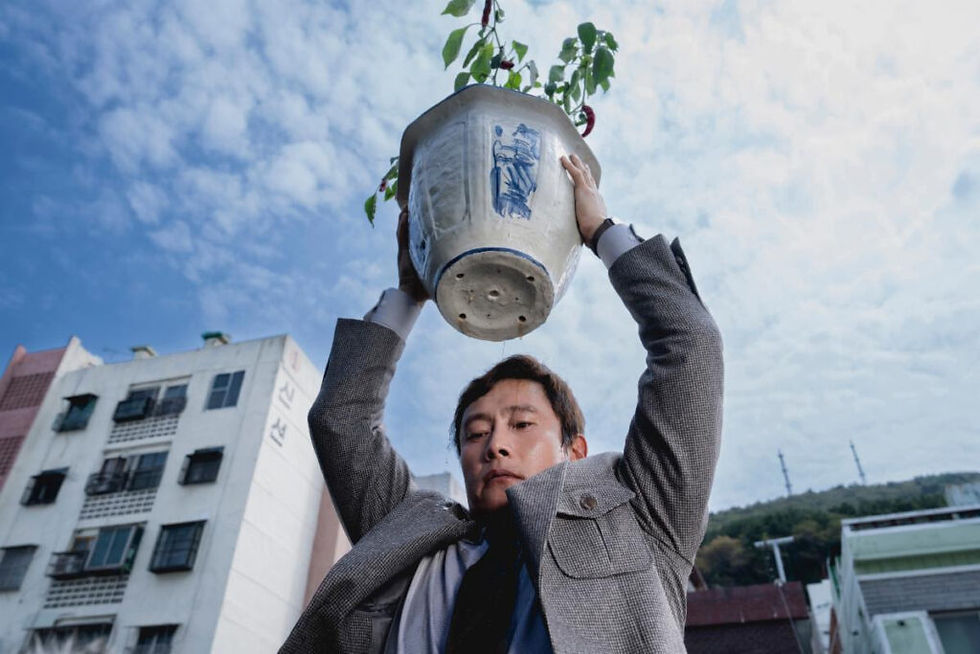
There is a reason that Korea was the site of the spark that revived Marxist cinema. The country that gave birth to the era-defining Parasite (2019) is also a country known for an epidemic of overworking. Seeing this, legendary director Park Chan-wook decided that the American novel The Axe would be suited for a Korean adaptation. He infused into the story the critique of another famous social problem in Korea: a culture of patriarchy and misogyny. But Park being Park (here is the man that brought us Oldboy in 2003) he can’t help but have a lot of fun with it. No Other Choice felt musical in its satirical comedic timing. Even when it is making exceedingly dark statements about Korea’s burnout society, it does so with a chuckle that lessens the weight without diluting the message. Every actor in this film is memorable, but Lee Byung-hun and Son Ye-jin gave performances that I think would be a sin for the Oscar to ignore.

(Credit: MUBI)
4. The Lost Princess
My favorite type of stories are those that marry the historical and the personal. On the one hand, The Lost Princess is an exploration of Thailand’s hidden colonial history, of a surviving noble of the northern kingdom of Lanna annexed by Thailand's Chakri dynasty in the 19th century, and now transformed into the modern province of Chiang Mai. On the other hand, this is an attempt by a granddaughter (director Kornpat Pawakranond) to tell the story of a grandmother who, in spite of the advancing forces of contemporary society, clings on to narratives and traditions of the past. It is as much a tale of political imperialism and a tale of tragic nostalgia. It is unflinchingly honest about who ‘princess’ Chao Duang Duan na Chiang Mai is and what she represents. Most importantly, it shows her unending empathy. Kornpat’s careful direction and crucial self-reflection throughout the documentary is a revelation. If this debut is any indication, she has the potential to become one of the greats of Thai cinema.

(Credit: University College London)
3. Soundtrack to a Coup de’tat
How does one tell the story of a nation’s murder? It is not difficult to explain the events that lead up to the tragic assassination of Patrice Lamumba, the independence leader who became the first prime minister of what was then known as the Republic of Congo (now the DRC). But to treat that story as the narrative throughline around which one weaves the complicated threads of the Cold War, American Imperialism, the Civil Rights movement, and late-stage capitalistic extraction, one will need the dynamic power of Jazz. In time and in tune with Armstrong, Simone, Roach, Lincoln, Gillespie, Ellington and more, the reading of the book Congo Inc., audio memoir of Nikita Khrushchev, and a slew of historical evidence are sown together into a tapestry - a visual and musical statement that unveils the exploitation of the people of the DRC and the so-called Global South not as a singular event but an ongoing historical trend.

(Credit: IMDb)
2. The Long Walk
Hunger Games director Francis Lawrence returns to the familiar premise of a dystopian future where a group of young people are forced to compete in a game of survival of the fittest. Fifty teenagers must walk at a constant speed without a clear finish line. Anyone who drops below a certain speed is shot. All this is done to inspire a nation ravaged by economic woes. Indeed, Steven King’s The Long Walk predates Suzanne Collins’ world-renowned young adult series, and is much simpler in its conceit. Instead of dwelling on the instinct to survive, the tactics and games to best one another, the characters of the film sink deeper and deeper into the meaninglessness of an endless trek. The story becomes less an allegory of war - likely King’s intention - and more of what Byung Chul-han calls the burnout society. In this simplicity, Lawrence finds the depth of humanity. Magically, I felt the highest highs and the lowest lows in a film that features nothing much aside from walking.

1. Sinners
Since his debut with 2013’s Fruitvale Station, we have always known that Ryan Coogler is a future star. The Creed and Black Panther franchises show what he could do with established IPs. But Sinners is an original story of Coogler’s own creation, and it contains multitudes. Yes, this is a story of historical inequality, of economic hardships and tragic unfulfilled wishes. But it is also about the power of culture, of personal passion, of fleeting moments of happiness and memories that last a lifetime. It is a story of an America told from the people it has long forgotten: from the sharecroppers of the post-slavery era to the early American-Asians who straddle the line of segregation. It deploys all the unique tools of filmmaking to advance a story that refuses to be confined by space or time. Like his character Sammy, Coogler unleashed his artistic magic to challenge the power structure, and set a precedent for artists securing ownership over their own creation. In its text, subtext, and paratext, Sinners proudly affirms the power of cinema and culture to affect historic change.


Comments